


By AML Intelligence Correspondent
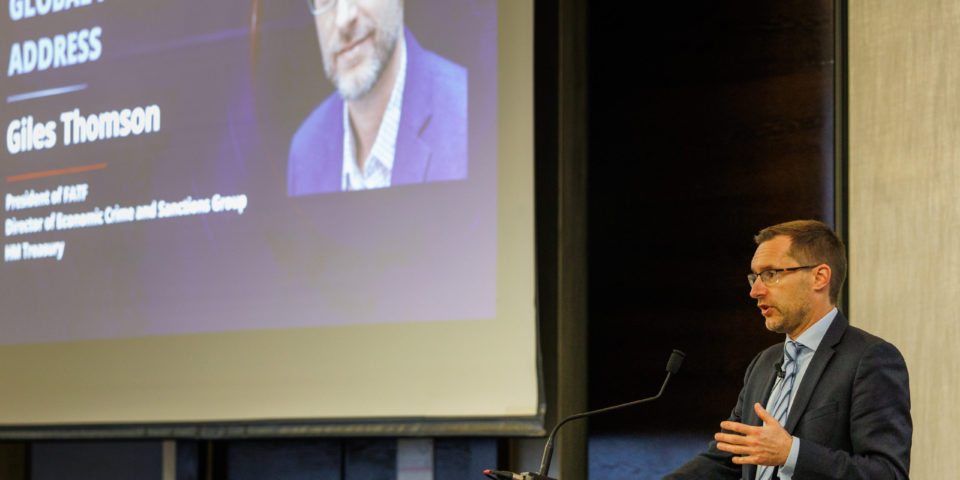
“THE worst is still to come” in the global fraud epidemic, the president of FATF has warned in stark terms.
Giles Thomson said “growing digitalisation, technological developments and better connected payment systems” mean the problem of fraud and scams are set to explode.
Fraud is already estimated to cost around $500 billion globally each year -representing almost half of all crime in some countries.
In response FATF has approved a major new report that will help countries respond to one of the most rapidly expanding forms of organised crime globally – scam compounds.
The industrial-scale scam compound model has expanded sharply since the Covid-19 pandemic, and is backed by a professionalised crime-as-a-service economy.
Annual losses from scam compounds are estimated to be in the tens of billions of dollars with around 70% of scam victims not reporting the crime, we cannot know the true scale.
“And beyond the financial cost, scam compounds claim victims on both sides of the screen – those being defrauded, and those coerced into perpetrating the scam,” said Mr Thomson.
The problem is global, with victims reported in more than 100 jurisdictions, so a coordinated international response was needed.
FATF’s new “landmark report” will document the activity of scam compounds across Africa, Europe, Central America, and Southeast and Eastern Asia.
In his remarks at the FATF Plenary in Paris last week, Mr Giles continued on the problem of fraud:
“As the first step in the FATF’s roadmap on combating fraud, that we launched on 1 July, we have followed the money through the entire scam compound business model, from how criminal proceeds are generated and moved, to how they are laundered and reinvested.
“By tracing those illicit financial flows, we will set out how countries can better prevent, detect and disrupt these crimes at an earlier stage and recover criminal assets.
“The report draws on global analysis, with more than 100 case studies and examples, including on how innovations such as anti-scam centres and cutting-edge technological solutions can help to speed up and improve our response.
“Because technology is a key part of the fight against scam compounds. But it has also drastically reduced the time that authorities have to respond, as criminals scale and adapt their activities faster than ever.
“For instance, Thailand reports that illicit funds can move from a victim’s account to an exit point from the financial system in just three to five minutes. Yet victims take on average 20 hours to realise that they have been scammed.
“That stark gap shows the challenge we face. Fraud now moves at extraordinary speed, and our response must keep pace. FATF will continue to adapt, working with countries and the private sector to disrupt illicit financial flows earlier, before they disappear beyond reach.
“We also see artificial intelligence enabling convincing impersonation attacks and helping criminals target thousands of victims simultaneously.
“And criminals are leveraging instant payment systems and virtual assets to move funds within minutes and conceal their proceeds.
“This report will be published next week, and I urge governments around the world to take note of its recommendations.
“The FATF’s focus in this area has been welcomed by the G20, and we will not stop here. Over the coming months we will build on this report by looking at how countries are using the FATF’s existing toolkit to combat fraud, and discuss recommendations for where further work is needed,” he added.