


By ELIZABETH HOWCROFT for AML Intelligence
ORGANISED CRIME is taking advantage of gaps in regulation to move billions in illicit proceeds through the crypto industry, FATF warned today (Thursday), in its latest review into the role of virtual assets and illicit finance.
Moreover, the use of stablecoins by illicit actors has increased in the past year, with some criminal networks developing their own stablecoins which can resist being frozen or seized by authorities.
The report by Paris-based FATF found that:
- Crypto-enabled crime has become more “complex and interconnected” in space of just one year.
- Regulators, banks and crypto companies face “significant and ongoing challenges” in detecting and stopping dirty money flows from scam compounds and investment fraud networks.
- “Significant gaps” remain in translating risk assessments into actual steps to reduce crypto crime.
While more countries had introduced legislation to regulate virtual assets, many are still working on implementing the rules in practice, with organised crime groups taking advantage of these gaps to move billions in illicit proceeds through the sector.
The report finds that 83% of surveyed jurisdictions have now passed legislation implementing the Travel Rule, up from 73% in 2025, while a further 11 jurisdictions report that implementation is under way.
The FATF’s seventh Targeted Update on Implementation of the FATF Standards on Virtual Assets (VAs) and Virtual Asset Service Providers (VASPs), assesses jurisdictions’ compliance with FATF Recommendation 15 (R.15) on VAs and VASPs. It finds that overall, jurisdictions, including those with materially important VASP activity, have made progress since 2025 towards developing or implementing anti-money laundering and counter-terrorist financing (AML/CFT) regulation and taking supervisory and enforcement actions.
However, FATF highlights the need for further work on regulation, licensing and registration despite continued progress, and that jurisdictions continue to face difficulties in identifying individuals and entities that conduct VASP activities, with many jurisdictions yet to translate legal frameworks into effective supervision and enforcement in practice.
Jurisdictions continue to report challenges with mitigating the risk of offshore VASPs, as highlighted in the FATF’s report on offshore VASPs published earlier this year, and in assessing and mitigating risks associated with decentralised finance (DeFi) platforms, which may represent an increasingly significant gap as regulated entities, including financial institutions and VASPs, expand their engagement with DeFi platforms.
The FATF finds that jurisdictions adopting prohibition frameworks continue to face challenges in identifying and sanctioning illicit VASP activity. While prohibition is permitted under the FATF Standards, its effectiveness depends on robust supervision and enforcement.
Jurisdictions with materially important VASP activity
The report also includes an updated table of the steps taken by jurisdictions in the FATF’s Global Network with materially important VASP activity to regulate VA/VASPS. With these jurisdictions constituting approximately 97% of the global VA market, ensuring the FATF Standards are fully implemented by jurisdictions within this group will significantly help to reduce global risks overall.
The FATF will continue to conduct outreach and provide assistance to jurisdictions, particularly those with lower capacity and materially important VASP activity to encourage and support compliance with Recommendation 15.
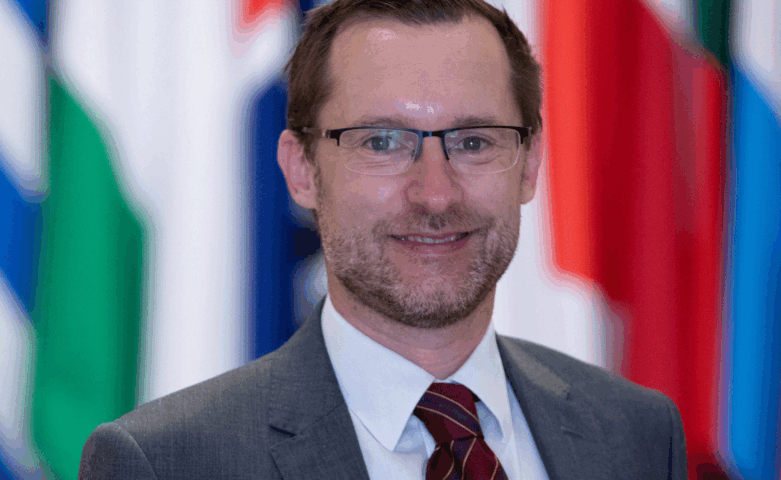
| New FATF President Giles Thomson said: “This year’s targeted update makes clear that criminal networks continue to abuse virtual assets for illicit purposes and exploit their borderless nature to commit fraud and scams, evade sanctions and launder the proceeds of crime – taking advantage of gaps in countries’ frameworks and uneven implementation of FATF Standards across jurisdictions. “Effective implementation of the FATF Standards can no longer be delayed. Governments and the private sector must work together to strengthen preventive measures and close regulatory gaps, bolster cross-border co-operation and deny criminals the opportunity to exploit weak links in the global system. “As criminal methods become more sophisticated, safeguards must keep pace with technological change and ever-evolving criminal tactics,” Thomson added. |
Criminal exploitation of virtual assets
The report highlights emerging risks arising from the criminal exploitation of virtual assets including:
- Since 2025, VA-enabled illicit activity has become more complex and interconnected, including through Organised Crime Groups-linked scam centre operations, “pig-butchering” scams, Democratic People’s Republic of Korea (DPRK)-related cyber theft, terrorist and proliferation financing, sanctions evasion and cross-border money laundering.
- A Cambodia-based financial services conglomerate laundered at least USD 4 billion in illicit proceeds between 2021 and 2025, serving both organised crime-linked fraud schemes and DPRK-related cyber theft through the same infrastructure.
- In June 2025, the Spanish Guardia Civil dismantled a cryptocurrency investment fraud network that allegedly laundered approximately EUR 460 million from more than 5 000 victims worldwide, illustrating the increasingly transnational nature of virtual asset-enabled fraud and money laundering.
- The misuse of artificial intelligence in virtual asset-related crime across fraud, hacking and money laundering schemes, is growing at scale, with the report highlighting the use of deepfakes, synthetic identities and AI-enabled recruitment scams.
- The misuse of stablecoins by various illicit actors, including DPRK actors and terrorist financiers, has continued to increase since the 2025 Targeted Update, and most identified on-chain illicit activity now involves stablecoins. Building on the FATF’s report on stablecoins earlier this year, the report highlights an emerging risk in which criminal networks have begun developing proprietary stablecoins designed to resist freezing and asset seizure, illustrating how illicit actors continue to adapt in response to regulatory action.
Findings from significant cases over the past year, such as the Spanish Guardia Civil’s dismantling of a cryptocurrency investment fraud network, highlight the importance of international co-operation and the ability to freeze and seize assets to disrupt criminal networks and their activities.
Published at the outset of the United Kingdom’s FATF Presidency which has committed to tackling the growing threat of fraud and accelerating work on virtual assets, the report highlights the importance of turning regulatory frameworks into effective action.
It sets out priority actions for both public authorities and the private sector, including strengthening risk-based supervision and enforcement, improving implementation of the Travel Rule, enhancing international co-operation and addressing risks arising from stablecoins, offshore VASPs, unhosted wallets and DeFi arrangements.