


By PAUL O’DONOGHUE, Senior Correspondent
THE UAE (United Arab Emirates) has recently revealed its performance in cracking down on financial crime in 2025.
One of the most eye-catching figures was the AED 4.23 billion ($1.15 billion) in domestic confiscations relating to illicit activity.
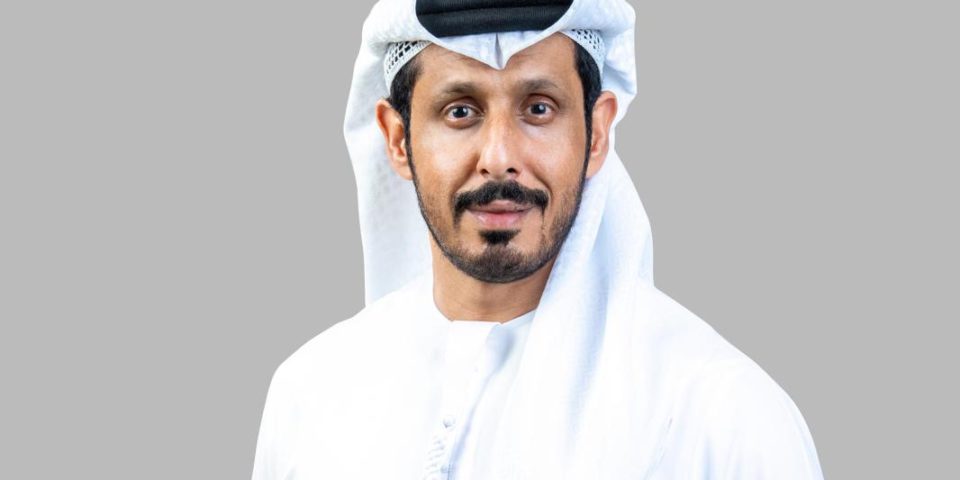
In an exclusive interview with AML Intelligence, the head of the UAE’s AML secretariat H.E. Hamid Al-Zaabi discusses the crackdown.
He also examines the UAE’s major financial crime developments in 2025, its plans for 2026 and the country’s work on beneficial ownership registrations.
The department is officially known as the General Secretariat of the National Anti-Money Laundering and Combating Financing of Terrorism and Proliferation Financing Committee (NAMLCFTPFC)
Financial crime developments
Q: What do you think was the most significant development the UAE made in tackling financial crime in 2025?
2025 was a really significant year for the UAE’s AML/CFT/CPF framework. The most significant development was the adoption of Federal Decree-Law No. 10 of 2025 and its Executive Regulations, which updated the UAE’s legislative framework and aligned it with the latest FATF Standards, including new requirements relating to proliferation financing, beneficial ownership transparency, virtual assets, asset recovery, and strengthening national coordination.
The importance of this development is reflected in the continued strengthening of the UAE’s national AML/CFT/CPF system and the strong outcomes achieved across a number of key indicators. In 2025, the UAE recorded further growth in international cooperation, increased the use of financial intelligence, strengthened beneficial ownership transparency, enhanced supervisory outcomes, and maintained strong asset confiscation results.
These developments demonstrate the UAE’s continued progress in moving beyond technical compliance towards delivering effective and measurable outcomes in combating financial crime.
Q. The UAE reported that domestic confiscations related to financial crime reached AED 4.23 billion in 2025. How did that compare to 2024?
Asset recovery is a strategic priority for the UAE and one of the clearest measures of effectiveness in combating financial crime. It demonstrates a jurisdiction’s ability not only to detect and investigate illicit activity, but also to deprive criminals of the proceeds of crime.
Domestic confiscations remained at a very high level in 2025, reaching AED 4.23 billion, while a further AED 750 million was returned directly to victims.
Looking at the broader trend, the UAE has recorded substantial growth in asset recovery outcomes over recent years. Domestic confiscations were approximately AED 1 billion in 2022, AED 2.2 billion in 2023, and exceeded AED 5 billion in 2024. International confiscations were also a feature, with the UAE successfully confiscating AED 28.29 million in cross-border criminal property in 2025.
Building on the exceptional results achieved in 2024, the UAE maintained a very strong level of confiscation outcomes in 2025, reflecting the continued maturity of its financial investigation and asset recovery framework.
Research by the Global Coalition to Fight Financial Crime has previously identified the UAE as being among the leading jurisdictions globally for confiscation performance relative to estimated criminal proceeds.
Confiscations
Q. Does the UAE expect domestic confiscations in 2026 to be higher than the AED 4.23 billion recorded in 2025?
It is still too early in the year to make a reliable prediction. Asset recovery figures can fluctuate significantly depending on the complexity and timing of major investigations and court proceedings.
What I can say is that the UAE continues to strengthen its capabilities in financial investigations, international cooperation, asset tracing, and confiscation. We are also implementing new provisions under Federal Decree-Law No. 10 of 2025 that further strengthen the asset recovery framework. Our objective is not to target a particular number, but to ensure that crime does not pay and that illicit proceeds are identified, restrained, confiscated, and where appropriate returned to victims.
Q. What will now happen to this AED 4.23 billion? Will it go to the state? If so, what will the money be used for?
During 2025, and following a judicial order, the Public Prosecution may entrust the Ministry of Justice’s Committee for the Management of Frozen, Seized, and Confiscated Assets with the oversight of these assets. To maintain their value, the Committee handles these holdings either directly or through the appointment of a qualified delegate, tailored to the specific type of asset and its preservation needs.
The new amendments aim to meet FATF standards recently adopted following the adoption of Federal Decree-Law No.10. The UAE is currently advancing the implementation of this framework and examining international best practices for the long-term management and allocation of recovered assets. As part of this process, the UAE has engaged with a number of leading jurisdictions with extensive experience in asset recovery, including Italy and France.
Different countries adopt different models. Some prioritise victim compensation, while others reinvest recovered assets into law enforcement, prevention programmes, or wider public purposes. The UAE is carefully assessing these approaches to ensure the framework maximises both effectiveness and public benefit.
Beneficial ownership
Q. The UAE highlighted progress in beneficial ownership registrations. Does the UAE plan to share this information with any non-government bodies (e.g. private banks)?
The UAE has made significant progress in strengthening beneficial ownership transparency. By the end of 2025, 91.7% of previously identified deficiencies had been resolved, leaving only 336 legal persons without beneficial ownership information, compared to 4,038 in 2024. Risk-based inspections increased from 155,000 to 239,000, while beneficial ownership enquiries rose to approximately 3,300.
The National Economic Register (NER) is a centralized UAE database that enhances transparency by maintaining comprehensive, real-time data on all legal entities and their Beneficial Owners. The NER provides access to basic information as well as BO information according to the UAE procedures compliant with FATF requirements. The NER ensures competent authorities have access to adequate, accurate, and up-to-date information regarding legal persons and legal arrangements.
Q. Which areas of financial crime policing has the UAE focused on in 2026?
Three areas stand out.
The first is fraud. Globally, fraud has become one of the fastest-growing predicate offences generating illicit proceeds. It causes significant harm not only to financial systems but also to individuals, businesses, and public confidence. For this reason, fraud is becoming a strategic priority internationally. The FATF has increased its focus on fraud, and I expect it will feature prominently during the UK’s FATF Presidency in 2027.
To this end, at the General Secretariat we recently published a white paper examining the UAE’s anti-fraud framework and benchmarking international best practice. We are currently consulting government authorities, law enforcement agencies, supervisors, and private-sector stakeholders as part of that process.
The second is narcotics trafficking. The UAE’s geographic position and world-class transport infrastructure make it a target for international criminal networks seeking to move illicit goods between production and destination markets. UAE authorities have therefore continued to prioritise major interdictions and international cooperation against transnational organised crime.
The third is terrorist financing. While TF is not assessed as high risk in the NRA, it remains a core national security priority. In 2025, the UAE recorded 56 terrorist financing investigations and a 62% increase in suspicious reports related to terrorist financing. Given developments across the region, maintaining vigilance against terrorist financing networks remains essential.
MENAFATF goals and EU cooperation
Q. How has the UAE progressed on its MENAFATF goals for 2026?
Our Presidency of MENAFATF has been an enriching experience and reinforces the UAE’s commitment to strengthening the effectiveness of AML/CFT systems across the Middle East and North Africa region.
We established six priorities at the beginning of the Presidency, covering preparation of MENAFATF members to the third round of the Mutual Evaluation process governance reform, strategic partnerships, typologies and emerging risks, institutional capacity building, and enhancing MENAFATF contribution to the effectiveness of the Global Network. Progress has been made across all six areas.
At the 42nd MENAFATF Plenary in Rabat, members approved a number of important reforms and initiatives. We also formalised Italy’s admission as an observer and, for the first time, brought
academic institutions and think tanks into aspects of the Plenary agenda to strengthen the evidence base supporting policy discussions.
The MENA region matters globally. It sits at the crossroads of major trade routes linking Asia, Africa, and Europe; contains some of the world’s most important financial and energy hubs; and faces a diverse range of financial crime risks. Strengthening AML/CFT effectiveness in our region therefore contributes directly to the integrity and stability of the international financial system.
Q. The UAE has looked to increase cooperation with the EU and vice versa over the last two years or so. What impact has this made on financial crime enforcement?
The relationship between the UAE and the European Union has become increasingly important in recent years, both economically and in the fight against financial crime.
We maintain strong engagement with the European Commission, including DG FISMA, and have worked closely with individual member states. Personally, I have made a point of visiting European capitals, including Brussels, Paris, Berlin, Madrid, and Rome, because effective international cooperation is ultimately built on trust and relationships between institutions and individuals.
The results have been tangible. International cooperation indicators continued to rise in 2025. Incoming mutual legal assistance requests increased from 492 to 516, incoming extradition requests rose from 446 to 559, and requests for information received by the UAE Financial Intelligence Unit increased from 1,261 to 1,522. The value of assets frozen under pre-emptive orders also tripled to AED 150 million.
This cooperation has supported extraditions, joint investigations, intelligence sharing, asset tracing, and asset recovery. The EU remains one of the UAE’s most important economic and regulatory partners, and the establishment of AMLA adds another important institution with which we look forward to engaging as Europe continues to strengthen its own AML/CFT framewor