


By Louis Wittock
CEO & Co-Founder, Reform
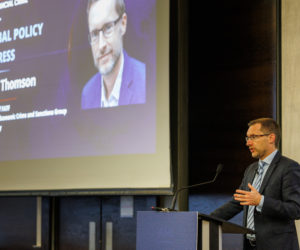
AT this year’s European Anti-Financial Crime Summit in Dublin, Elizabeth McCaul delivered what I believe may prove to be one of the most important speeches the AML industry has heard in years.
Not because she introduced a new regulation. Not because she focused on AI hype or emerging technologies. But because she articulated a fundamental shift that is now beginning to reshape the future of AML: the move from framework-based compliance toward demonstrable effectiveness.
That shift changes everything.
For decades, financial institutions have assessed AML programmes primarily through governance structures, control frameworks, policies, documentation and periodic testing exercises. But the financial crime landscape has evolved dramatically. Institutions today are operating increasingly complex transaction monitoring environments while facing more sophisticated typologies, faster-moving criminal behaviour and growing expectations around performance and accountability.
As a result, the industry is increasingly confronting a far more difficult question: how can institutions truly prove that their AML systems work?
That, ultimately, was the significance of Elizabeth McCaul’s speech in Dublin.
Because the future of AML will no longer be defined simply by whether controls exist. It will increasingly be defined by whether institutions can demonstrate measurable effectiveness and measurable outcomes.
Traditional AML validation is reaching its limits
One of the biggest structural challenges facing the industry today is that most transaction monitoring validation methodologies remain heavily dependent on sampling, retrospective analysis, expert judgement and fragmented tuning exercises.
These approaches can provide useful insights, but they do not allow institutions to genuinely observe how transaction monitoring systems behave across full populations, under evolving typologies or within continuously changing financial crime conditions.
This creates a major visibility gap.
Most institutions can explain how their controls are designed. Far fewer can genuinely evidence how their systems perform at scale.
In my opinion, this is where the next major transformation in AML begins.
The rise of AML ‘Digital Twins‘
In industries such as aerospace, engineering and manufacturing, digital twins and simulation environments have existed for years. These environments allow organisations to replicate complex systems in virtual environments where behaviour can be continuously observed, stress-tested and optimised before operational deployment.
AML is now reaching the point where similar capabilities are becoming necessary.
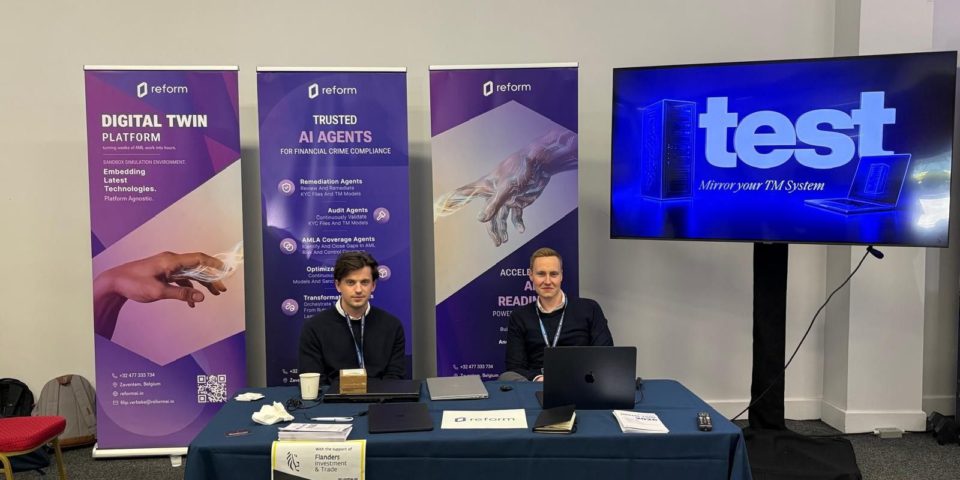
At Reform, this is precisely the vision we have been pioneering over the past two years through what we describe as the Reform Digital Twin.
The objective is not to replace existing transaction monitoring systems, but to create a simulation and observability layer sitting on top of them, an environment where institutions can replay historical activity, simulate emerging typologies, test detection logic, analyse behavioural outcomes, quantify detection coverage and continuously optimise effectiveness.
Because at scale, true effectiveness cannot be inferred from isolated samples alone. It must be continuously measured, challenged and evidenced.
From static monitoring to continuous evidence
What made Elizabeth McCaul’s speech particularly important is that it reflects a broader evolution now emerging across the AML industry.
Historically, AML transformation programmes focused primarily on alert reduction, workflow optimisation, tuning exercises and operational efficiency. Those priorities remain important. But a new layer is now entering the conversation: measurable effectiveness, observable system behaviour, continuous validation, performance visibility and evidence-based optimisation.
That is a profound shift because it fundamentally changes the objective of transaction monitoring itself.
The future will not belong to institutions operating the largest number of rules. It will belong to institutions capable of continuously understanding, measuring and improving how their systems actually perform.
Why this moment matters
I do not believe the concept of AML Digital Twins will remain theoretical for long.
The convergence between increasing system complexity, evolving expectations around AML effectiveness, AI-driven financial crime and the growing need for measurable outcomes is accelerating rapidly.
And after the discussions that took place in Dublin, I believe the direction of travel is becoming increasingly clear.
AML effectiveness can no longer be inferred from frameworks alone. Increasingly, it will need to be demonstrated through evidence.
That is the shift Elizabeth McCaul signalled in Dublin.
And in my view, it may become one of the defining transformations of AML over the next decade.
- Louis Wittock is the CEO and Co-Founder of Reform, an EU-based RegTech company pioneering AML Digital Twin environments to help financial institutions continuously measure, simulate and optimise AML effectiveness.