


By PAUL O’DONOGHUE, Senior Correspondent
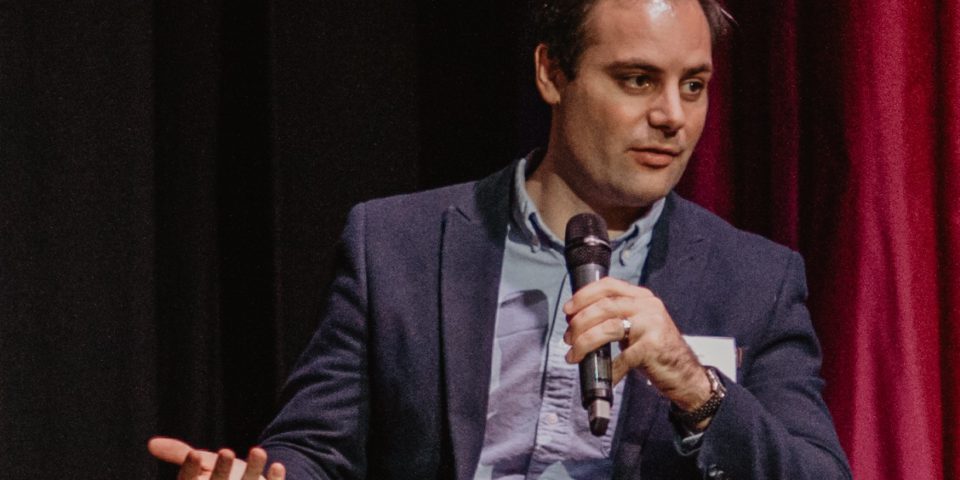
OVER the past 48 hours, Ben Delo has become a household name in the UK.
The crypto billionaire’s £36 million gift to Reform UK, the right-wing party led by Nigel Farage, is by far the single largest political donation in the country’s history.
At least, it was for about a day, before British billionaire businessman Christopher Harborne announced he would match the £36 million pledge.
But for today we’re focusing on Delo, the co-founder and former executive of BitMEX, a crypto exchange and derivative trading platform.
This is the source of Delo’s fortune. After its foundation in 2014, BitMEX became wildly popular after introducing products which allowed traders to speculate on Bitcoin’s price without owning the crypto, using highly leveraged contracts.
Delo became a billionaire by 2018, when he was just 34.
However, the platform soon ran into serious trouble for its lax approach to AML (anti-money laundering) and compliance.
In 2022, Delo pleaded guilty to violating the Bank Secrecy Act, a key US AML law. He received a 30 month probation sentence. US President Donal Trump pardoned Delo and Arthur Hayes, BitMEX’s co-founder, in March 2025.
But there is still plenty to dig into regarding Delo’s AML failings. Here are the key details:
Ben Delo money laundering conviction
According to US prosecutors, Delo and Hayes designed the company as a platform to “flout U.S. anti-money laundering rules”.
The pair “willfully” failed to implement or maintain even basic controls to prevent financial crime and money laundering.
Customers could sign up to trade crypto assets using just an email address, without verifying their identities.
Prosecutors alleged that this may have led to BitMEX becoming a tool for criminals.
In May 2018, Hayes was notified of allegations that BitMEX was being used to launder the proceeds of a cryptocurrency hack.
“Neither Hayes, Delo, nor their company filed a suspicious activity report thereafter,” the New York division of the US Attorney’s Office said.
In fact, BitMEX did not file a suspicious activity report (SAR) between 2014 and September 2020. Officials would expect a company of its size, operating in its sector, to have filed at least a few hundred.
Prosecutors also said that BitMEX became a “vehicle for sanctions violations”.
“Hayes and Delo both communicated directly with BitMEX customers who self-identified as being based in Iran, a sanctioned jurisdiction, but did nothing to implement an AML or KYC program after doing so,” prosecutors said.
‘Sham’ US withdrawal
Additionally, because of its failure to implement AML policies, BitMEX was not meant to operate in the U.S.
Despite this, officials said that Hayes and Delo both knew that BitMEX’s purported withdrawal from the U.S. market in September 2015 was a “sham”.
The pair “actively sought out” U.S. customers by using U.S.-based crypto influencers to market to new customers. Prosecutors even alleged that Delo altered U.S. customer information to hide the customer’s true location.
Finally, FinCEN, the US Treasury’s anti-financial crime unit, also fined BitMEX $100 million in 2021 for the same AML problems.
It reported on some more details, such as how BitMEX conducted at least $209 million in transactions with known darknet markets or unregistered money services businesses.
It also identified at least 588 suspicious transactions where BitMEX had failed to file a SAR.
Over the years, BitMEX lost much of its market share in the crypto derivatives market, and is now due to stop operating on September 23.
Delo has now moved on from BitMEX. He is now focused instead on philanthropy and, as evidenced by his Reform donation, politics.