

By Him Das, Sam Kleiner and Roberto Gonzalez
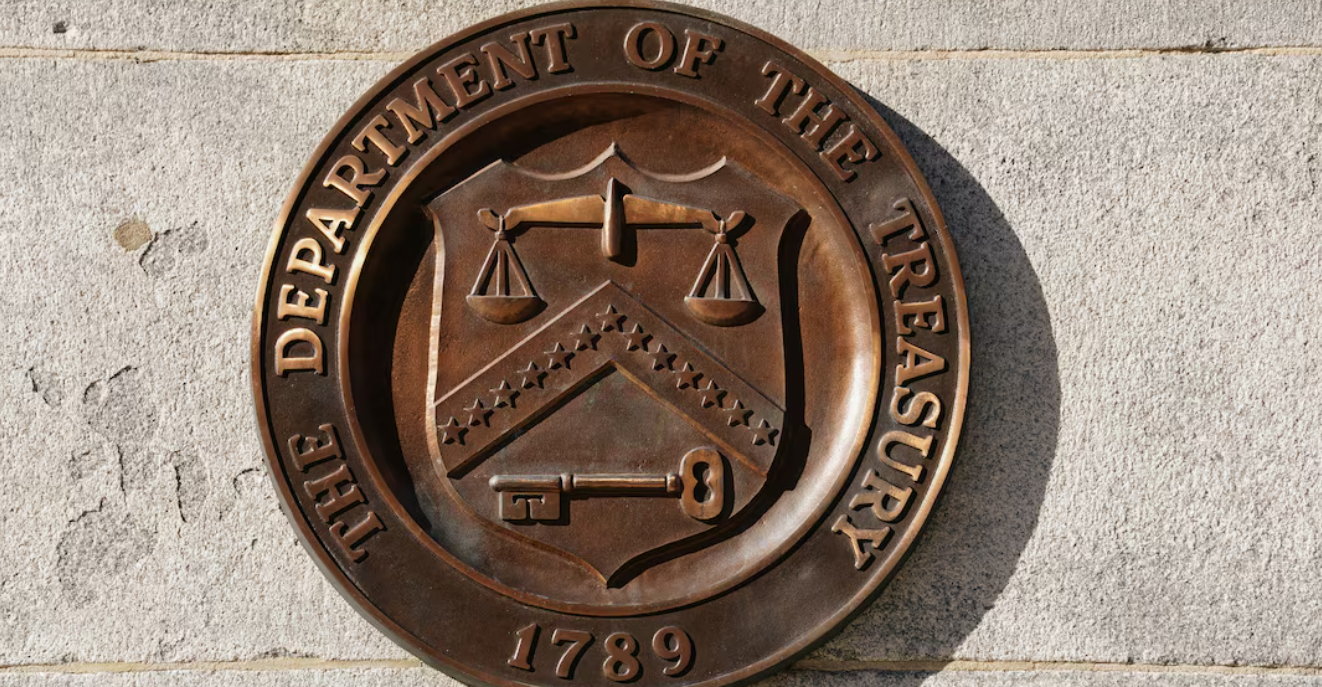
OVER the past few years, the Department of Treasury’s FinCEN has increasingly come to rely on Geographic Targeting Orders (known as a ‘GTO’) as a key feature of US efforts to combat illicit finance.
GTOs require certain entities in a geographic area to identify, maintain, and report information about specified transactions and participating parties. Historically, FinCEN used the authority to fill gaps in the Bank Secrecy Act/anti-money laundering (“BSA/AML”) regime by requiring reporting by certain nonfinancial businesses; more recently, it has directed GTOs toward banks and money transmitters, adding a layer of reporting obligations on top of their BSA/AML requirements.
In the last month there have been significant developments with respect to GTOs. First, the Ninth Circuit’s July 2026 decision in Novedades affirmed an injunction against the Southwest Border GTO. Second, FinCEN’s August 2026 renewal of the Minnesota GTO, which applies to banks and money transmitters in certain Minnesota counties, shows that FinCEN is continuing to utilize GTOs to impose obligations on banks and money transmitters. And earlier this week FinCEN reissued an order requiring certain money services businesses (MSBs) along the southwest border to report cash transactions of $1,000 to $10,000.
In this article, we provide background on GTOs, discuss the implications of recent judicial developments, and offer practical takeaways for financial institutions.
The evolution of GTOs
GTOs are an information-gathering mechanism that Treasury has described as a “valuable tool” to “support our efforts and to support law enforcement’s efforts.” The authority is set out in 31 U.S.C. § 5326, which was added to the Bank Secrecy Act by the Anti-Drug Abuse Act of 1988 and was subsequently expanded to cover nonfinancial businesses in the USA PATRIOT Act of 2001.
Under section 5326, the GTO is framed as a narrow, targeted, and presumptively non-public instrument. Upon a finding that “reasonable grounds exist,” Treasury may issue an order requiring “any domestic financial institution or nonfinancial trade or business,” or any group of them in a geographic area, to obtain information concerning “any transaction” and “any other person participating in such transaction.” Section 5326 can apply to “funds” transfers, including transactions involving convertible virtual currencies. An order is effective for no more than 180 days unless renewed.
GTOs have been deployed to plug gaps in the BSA/AML regulatory framework by imposing reporting requirements on businesses not otherwise subject to FinCEN’s AML program regulations. In the mid-1990s, FinCEN required money transmitters in the New York area and later in Puerto Rico to report information about cash-purchased transmissions of $750 or more to Colombia and the Dominican Republic. Treasury later cited the results of these GTOs to support the extension of comprehensive AML regulations to MSBs.
In 2014 and 2015, FinCEN issued GTOs covering nonfinancial businesses, including garment and textile businesses in areas of Los Angeles and electronics exporters in Miami, to shed light on trade-based money laundering by drug cartels. In 2022, FinCEN imposed a civil penalty on a perfume store, the first enforcement action relating to a GTO, for violating the Los Angeles GTO, noting that the action “puts nonfinancial trades and businesses on notice that they must comply with Geographic Targeting Orders.”
Beginning in 2016, FinCEN used the GTO authority to require U.S. title insurance companies to identify and report the natural persons behind legal entities used in certain all-cash residential real estate purchases due to a concern that such purchases were being used for money laundering purposes. Originally focused on Manhattan and Miami, the program was renewed every six months for nearly a decade and expanded to cover transactions in fourteen jurisdictions. The real estate GTOs demonstrate that serial renewals can make a nominally 180-day order de facto permanent. The GTOs lapsed in February 2026 when FinCEN’s Residential Real Estate Transfers Rule took effect.
In addition to serially renewing GTOs so they are in effect for long periods of time, FinCEN is using them on a broad geographic scale. Treasury described the GTO authority in 1989 as applying to an area “as small as a few city blocks or as large as a major metropolitan area.” Recent orders have covered dozens of counties. Evolving payment infrastructure also raises questions about how a geographically limited tool can apply to fintech, cryptocurrency, and P2P payments that may originate from a cellphone rather than a branch or storefront.
Recent developments: the southwest border GTO and the Minnesota GTO
Over the past year, FinCEN has utilized GTOs to target MSBs and banks, effectively adding obligations on top of those entities’ existing BSA/AML obligations.
The Southwest Border GTO
In March 2025, FinCEN issued a GTO requiring MSBs in specified ZIP codes in Texas and California along the Southwest border to file Currency Transaction Reports (“CTRs”) at a $200 threshold, which is significantly below the standard $10,000 CTR threshold. FinCEN explained that the order was intended to address cartel-related activity. In September 2025, after litigation, FinCEN reissued the GTO and expanded it to include entire counties in Texas and zip codes in Arizona but raised the reporting threshold to $1,000. In March 2026, FinCEN again renewed the GTO and expanded it to additional geographic areas, including counties in New Mexico and major metropolitan areas such as Phoenix and Tucson, Arizona.
The Minnesota GTO
In January 2026, FinCEN issued a GTO requiring all banks and money transmitters in the counties containing Minneapolis and St. Paul, Minnesota to file reports with FinCEN about certain international funds transfers of $3,000 or more. This GTO was “taken in furtherance of Treasury’s efforts to combat international money laundering of the proceeds of government benefits fraud in Minnesota.” In August 2026, FinCEN renewed that GTO through February 2027. Notably, this was the first GTO that applied to banks, which are subject to existing BSA/AML requirements under FinCEN’s regulations.
The Minnesota GTO goes beyond banks’ existing recordkeeping obligations, which already require banks to maintain records on international funds transfers of $3,000 or more. Under the GTO, covered financial institutions must obtain and report information about the transaction, including the beneficiary’s name, address, date of birth, and contact information and whether the source of funds for the transfer is “from any federal, state, or local government contract or benefit program.”
The GTO has created implementation challenges. A covered financial institution may rely on originator-provided information unless it has “knowledge of facts—obtained in the ordinary course of business—that would reasonably call into question the reliability of the information provided.” FinCEN notes that a financial institution may not rely on “factually implausible” information and must consider information suggesting that the transaction source was a government contract or benefits program.
The southwest border GTO litigation
Following the issuance of the Southwest Border GTO, three federal courts enjoined its enforcement, one in the Southern District of California and two in the Western District of Texas. The litigation raises two distinct sets of issues: procedural challenges under the Administrative Procedure Act (“APA”) and a constitutional challenge under the Fourth Amendment.
With respect to the APA challenges, the question is whether FinCEN could impose the new reporting requirements by “order,” or whether it was instead required to proceed through notice-and-comment rulemaking. On July 13, 2026, in Novedades y Servicios, Inc. v. FinCEN, a panel of the Ninth Circuit affirmed a preliminary injunction, holding that the plaintiffs—a small San Diego check-cashing business and its owner—were likely to succeed on their claims under the APA.
The panel held that the Southwest border GTO was likely a “rule,” rather than an “order,” and therefore was invalid for failure to go through notice-and-comment rulemaking. In finding that the GTO was likely a rule, the panel noted that it applied to all unnamed and unspecified MSBs across 30 ZIP codes rather than a particular set of MSBs that were served by mail; it rested on generalized findings about cartel activity rather than the adjudication of particular disputed facts; and it determined policy rather than resolving a dispute between particular parties. The panel also held that the Southwest Border GTO was likely arbitrary and capricious under the APA because FinCEN “entirely failed to consider the cost of compliance to regulated parties.” The panel also found that the presumption of regularity had been rebutted, rejecting FinCEN’s reliance on an undated and redacted internal FinCEN memorandum.
With respect to the constitutional challenge, the court in Texas Ass’n of Money Services Businesses went beyond Novedades and held that the GTO also likely violates the Fourth Amendment, an issue now before the Fifth Circuit. The holding raises broader questions about the constitutionality of the BSA/AML reporting regime that could extend beyond GTOs. In 1974, the Supreme Court upheld the original $10,000 currency transaction reporting requirement in California Bankers Ass’n v. Shultz while noting that transactions of that scale were “abnormally large.” The Texas Ass’n of Money Services Businesses court held that the $200 threshold “unreasonably demands corporate records” and is “immensely burdensome,” concluding that the government’s power to compel reports has constitutional limits. The Ninth Circuit in Novedades expressly avoided the constitutional question, so the Fifth Circuit’s forthcoming decision may be the first appellate ruling on that issue, and could raise broader constitutional issues about the BSA/AML regime.
Key Takeaways
While the ongoing litigation may constrain the existing GTO authority, FinCEN’s Minnesota renewal shows that FinCEN is still using GTOs to address immediate priorities.
First, GTOs are now a core AML tool. FinCEN is using GTOs not only to plug gaps in the regulatory framework but also to layer new, potentially quasi-permanent obligations on institutions already subject to the BSA. Despite ongoing litigation, Treasury may continue to use GTOs given the low barriers to implementation, the signaling effect, and the financial intelligence impact.
Second, financial institutions should be prepared to update their compliance programs to account for new and existing GTOs. No court has yet enjoined the Minnesota GTO, and FinCEN’s renewal underscores that covered institutions should treat those obligations as continuing. FinCEN has enforced GTO violations, with costly results, and its recent whistleblower bulletin identifies GTO noncompliance as a priority tip category. If GTOs pose compliance challenges, targeted institutions should engage with FinCEN early. GTO compliance may also become a matter of supervisory attention in the context of examinations. Institutions should also consider whether to update Know Your Customer and transaction-monitoring programs to address the illicit finance risks targeted by FinCEN in the GTO and associated advisories.
Third, the deployment of broad GTOs now faces a significant legal obstacle, which may lead FinCEN to use more targeted and confidential GTOs. Under Novedades, a GTO that imposes new reporting obligations on a category of institutions across a broad geography based on generalized risk findings—at least in the Ninth Circuit—should be promulgated through notice-and-comment rulemaking. The Minnesota renewal also illustrates that recurring renewals, even when individually limited to 180 days, may invite future challenges over whether a nominally temporary order has been made permanent or whether a geographically targeted measure has been made too expansive.
Fourth, it remains to be seen how GTOs will be utilized in the context of evolving payments systems. As more payments are done through MSBs or virtual currency exchanges that may not have a specific physical presence in a region, FinCEN could have trouble applying a tool that is expressly designed to be utilized in the context of a “geographic area.” FinCEN could consider having money service platforms or virtual currency exchanges report information on transactions that it believes have occurred in certain areas (such as through IP address) or by persons resident in certain areas, but that would be a novel application of the authority and could be challenging to apply in practice.
Finally, policymakers and Congress may consider updates to the GTO authority as part of ongoing Bank Secrecy Act “modernization” efforts. Like many BSA tools, the Geographic Targeting Order was created decades before the modern payments system. The authority may have important information collection functions, but also needs to be balanced against the burden imposed on those subject to its requirements. As the Novedades court highlights, when utilized across a broad geographic area, it should appropriately be considered a “rule” that follows the ordinary notice-and-comment rulemaking process.
GTOs are likely to continue to be a tool that FinCEN relies upon to impose additional reporting requirements on both financial institutions and nonfinancial trades and businesses. Financial institutions should expect that FinCEN will continue to utilize the tool and should build the compliance infrastructure necessary to respond when it does.
Him Das is Senior Managing Director and Counsel at K2 Integrity; Sam Kleiner and Roberto Gonzalez are Partners at Paul Hastings LLP.
The authors thank Ben Gifford and Elise Eckert for their contributions to this article.