



J. Edward Conway
Executive Secretary of the Wolfsberg Group
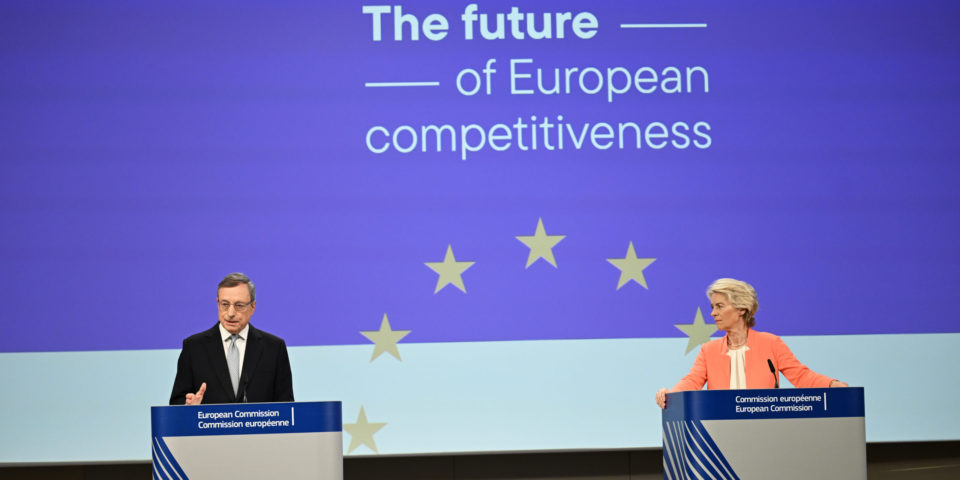
SINCE the release of Mario Draghi’s report on European competitiveness in September 2024, “simplification” has been the buzzword in Brussels on regulatory reform.
However, the first big gift to the simplification agenda came from the European Parliament just a few months before Draghi’s report: the Union’s anti-money laundering package. This would centralise supervision, enforcement, and regulatory guidance related to financial crime compliance under a single authority – the Anti-Money Laundering Authority (AMLA)– and harmonise the complex landscape of idiosyncratic regulation across Europe while making the Union safer from criminal threats.
Regulatory divergence in the EU means the same business needs to send different documents to open the same accounts in different EU countries. This divergence is why a financial institution must inefficiently set up its operations to cater for the unique regulatory framework of each EU member state. And most importantly, this patchwork means criminals continue to exploit Europe due to law enforcement challenges in identifying, analysing, and disrupting cross-border threat networks and conducting joint EU analysis.
‘According to Wolfsberg studies, proper harmonisation for many of our banks could result in up to a 20% drop in the costs associated with the process for filing once suspicious activity is confirmed, with the majority of the members seeing “significant” or “very significant” efficiency gains under a common format and a higher likelihood to hub European operations in the future’
Single rulebook at risk
The AML package was billed as a “single rulebook for the EU”, and in the wake of the Draghi report, the message from Brussels to the private sector and civil society groups vested in a more effective approach to tackling financial crime was that the regulatory package didn’t need to go through a simplification exercise because the package is simplification.
But the promise of the single rulebook is now at risk, and how the Frankfurt-based Anti-Money Laundering Authority navigates 2026 will be a very tangible, real test for the Union on its quest for a simpler, faster – and critically – safer financial system.
The immediate issue at hand is the way financial institutions report suspicious activity to law enforcement.
These are the confidential leads that inform law enforcement of suspected front companies for drug trafficking, environmental crime, brothels for sexual exploitation, payments related to the sextortion of minors, professional money laundering networks for oligarchs, and confidence scam payments to fraudsters that rob EU citizens of their savings and retirement. Banks monitor tens of billions of transactions in the EU annually to detect such activities.
At the moment, the way financial institutions report that information to each EU member state agency is completely different – that is, distinct reporting standards for the hundreds of thousands of reports filed each year.
Drop in costs
The words in the regulation could not be clearer: by July 2026, the Anti-Money Laundering Authority must specify the format to be used across the EU for the reporting of suspicious activity. And the expectations of the industry could equally not be clearer: this is exactly what financial institutions believed would happen under the single rulebook.
According to the Wolfsberg Group’s own member studies, proper harmonisation for many of our banks could result in up to a 20% drop in the costs associated with the process for filing once suspicious activity is confirmed, with the majority of the members seeing “significant” or “very significant” efficiency gains under a common format and a higher likelihood to hub European operations in the future.
‘Capturing data in the same format across EU member states will enable agencies to better fuse that data together on a cross-border basis, a major friction point right now that prevents the Union from having a truly pan-EU view on the threat networks we face’
Those gains in resources can be redeployed to more effective tasks, like complex investigations. But if that uniform approach instead becomes a minimum format with country-by-country uplifts – which is what some EU member states advocate – those positive views on efficiency gains flip, with the majority of our banks seeing a negative impact as regulatory divergence continues to make the Union less competitive.
Avoiding friction
More importantly, harmonisation is critical to making the Union harder for criminals to do business.
Capturing data in the same format across EU member states will enable agencies to better fuse that data together on a cross-border basis, a major friction point right now that prevents the Union from having a truly pan-EU view on the threat networks we face. And a common form and approach also means that the innovation that develops organically in one EU member state can be lifted and shifted across the Union.
‘The tension in realising this vision is representative of the larger tension behind the Draghi report: the ability of EU member states to recognise and resolve challenges in the short term to put the Union on the strategic heading over the long term to be more competitive and better protect its citizens’
This includes artificial intelligence solutions, for example, which can supercharge law enforcement’s ability to identify patterns or connections between criminals at a faster and more effective rate.
Why may harmonisation fail? Simply put – the challenge of change management.
Adapting a uniform format for reporting suspected criminals without country-by-country distinctions is, naturally, disruptive to the current way each member state operates. Change management is not easy, it requires investment and the bill for that investment will be picked up by each member state. But we believe that while the cost of harmonization is a one-off investment, the cost of continued divergence will be permanent.
The benefits are clear: significant long-term efficiency gains and a Union that more effectively identifies and disrupts criminal finance networks.
The tension in realising this vision is representative of the larger tension behind the Draghi report: the ability of EU member states to recognise and resolve challenges in the short term to put the Union on the strategic heading over the long term to be more competitive and better protect its citizens.