


By AML Intelligence Correspondents
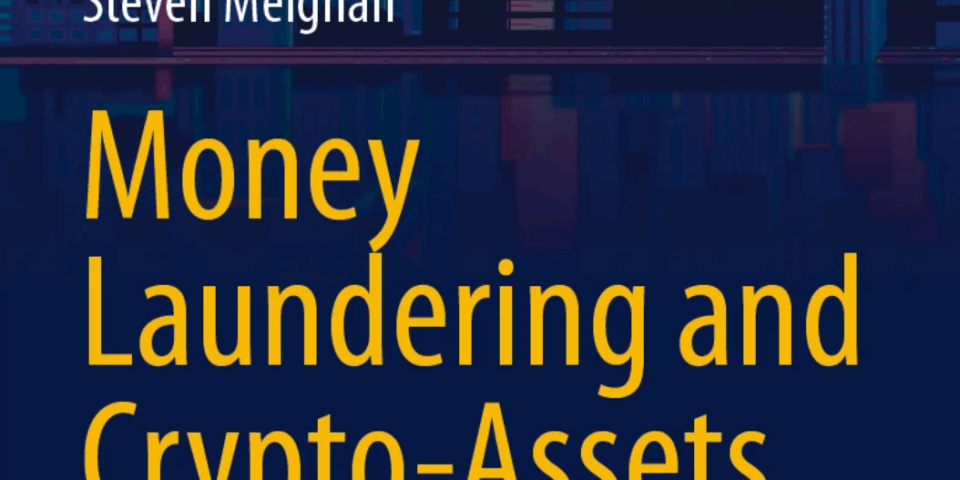
MONEY Laundering and Crypto-Assets: A Socio-Technical Approach to Financial Intelligence is authored by the Irish academic and practitioner Dr Steven Meighan and addresses one of the most pressing challenges facing financial intelligence and compliance communities.
This is Dr Meighan’s second book in a short period.
His first, Money Laundering in Ireland: Context, History and the Law (Clarus Press, 2025), explored the principle of “following the money” to understand and disrupt organised crime, with a particular focus on Ireland’s legal, historical and policing context.
This new book continues that journey, but in a domain where money increasingly becomes code. It draws on the author’s interdisciplinary background in computer science, law and policing, as well as his professional experience within Ireland’s Financial Intelligence Unit (FIU) and his work with the Financial Action Task Force (FATF).
In an era where digital finance functions simultaneously as a driver of innovation and a battleground for financial and organised crime, the book examines the exploitation of crypto-assets for illicit purposes and the challenges associated with regulating this activity effectively.
Its central contribution lies in a socio-technical analysis of the evolving relationship between money laundering, anti-money laundering frameworks and crypto-assets, an approach that moves beyond purely legal or technical explanations.
Laundering trends
The book:
- presents a clear overview of money laundering and crypto-laundering trends over the past decade;
- includes an in-depth case study of Ireland’s Financial Intelligence Unit (FIU);
- analyses the impact of measures implemented to prevent, detect and prosecute cyber-enabled financial crime in Ireland.
A particular strength of the work is its empirical foundation. By focusing on Ireland’s FIU, the book delivers what is presented as the first in-depth case study of its kind, drawing on the analysis of 2,719 suspicious transaction reports (STRs), expert practitioner insights and legislative developments.
This material is used to introduce a new socio-technical framework for understanding crypto-laundering, specifically, how crypto-assets are used to move and conceal illicit wealth across increasingly complex financial and technological systems.
While the book’s primary case study is rooted in the Irish context, its relevance extends well beyond national boundaries. The analytical framework and findings will be of value to financial intelligence units, regulators, compliance professionals and law enforcement agencies internationally.
Readers looking for operational insight rather than purely theoretical discussion will also appreciate the book’s practical orientation, although those seeking a broader comparative analysis across multiple jurisdictions may note the deliberate depth-over-breadth approach adopted.
Overall, Money Laundering and Crypto-Assets represents a timely and well-researched contribution to the AML literature, particularly at a moment when crypto-assets continue to test the limits of existing financial intelligence models. It will be of particular interest to practitioners and policymakers seeking to better understand how technological systems, regulatory responses and criminal methodologies interact in practice.
The book is available in hardback and e-book formats directly from Springer Nature and from all good booksellers.