


By Pete Schroeder and Nupur Anand for AML Intelligence
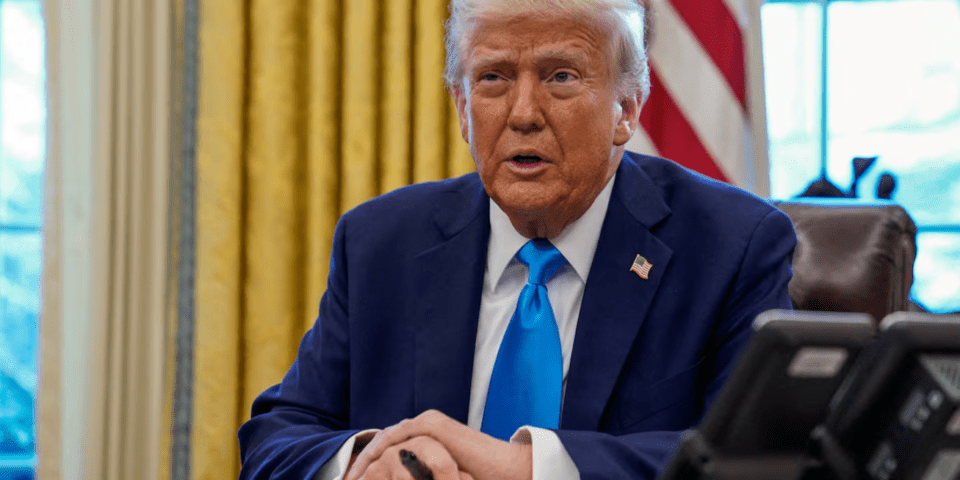
U.S. President Donald Trump stepped up pressure on large banks and their regulators last night (Thursday), signing an executive order requiring lenders not to debank anyone based on political or religious beliefs.
The order directed regulators to review all banks they supervise for any current or past practices that would effectively bar customers based on political or religious beliefs, and levy fines or other disciplinary measures as needed.
Lenders had largely reject the White House claims, citing the stringent compliance rules they must comply with new clients, which banks say are particularly burdensome for PEPs.
Regulators had already removed reputational risk as an area of bank supervision, a focus Republicans claimed was being used to deny banking access to some conservatives.
Now the new executive order formally requests US regulators drop this principle.
This week Trump cited Bank of America chief executive Brian Moynihan, who he said had personally refused to open a bank account for him after his account was closed by JPMorgan following his departure from the White House in 2021.
However in public, banks have welcomed Trump’s efforts on this. Moynihan said the president was “after the right thing” and supported his plans to introduce new rules. Moynihan has previously called for the relaxation of AML rules.
The new orders says agencies may refer certain cases to the Justice Department for potential civil action and also directed regulators themselves to purge any policies or practices that may discourage banks from providing services based on non-financial reasons.
The order was largely in line with industry expectations, with regulators getting 180 days to examine firms for discriminatory activities and review their own internal policies, according to two bank sources.
Key questions going forward will be how precisely various regulators interpret the order, and how banks will be expected to comply, said one of the sources.
“Financial institutions have engaged in unacceptable practices to restrict law-abiding individuals’ and businesses’ access to financial services on the basis of political or religious beliefs or lawful business activities,” the order said.
In the executive order, Trump also claims some financial institutions had engaged in “government-directed surveillance programmes” targeting conservatives and their allies in the wake of the attacks on the US Capital on January 6 2021.
Banks meanwhile have increasingly complained the reputational risk standard was too subjective and vague, allowing bank supervisors to effectively bar firms from providing services to some people or sectors.
The industry has also argued regulators need to update AML rules, which frequently can force banks to shut down suspicious accounts without providing a reason.
“Most banks already have policies and procedures governing when they’ll decline to open an account or close accounts for existing customers, typically emphasizing things like money-laundering risk or solvency concerns. Today’s order puts increased pressure on those policies,” said David Sewell, a partner at law firm Freshfields.
The executive order is the latest in a growing pressure campaign against the financial sector by U.S. conservatives, who argue they have been unfairly deprived of services on the basis of their political beliefs.
Trump claimed in a CNBC interview on Tuesday that he personally was discriminated against by banks, asserting without evidence that JPMorgan Chase and Bank of America refused to take his deposits following his first term in office.
JPMorgan said on Tuesday it does not close accounts for political reasons. Bank of America said it does not comment on client matters, and would welcome clearer rules from bank regulators on how to conduct its activities.
The executive order said some financial institutions participated in “government-directed surveillance programs” against conservatives following the attack on the U.S. Capitol on January 6, 2021, by Trump supporters.
“Such practices are incompatible with a free society and the principle that the provision of banking services should be based on material, measurable, and justifiable risks,” the executive order said.
Large banks have consistently said they do not reject customers on political or other belief-based grounds. Instead, they have argued that overzealous bank regulators and supervisors have discouraged them from engaging with certain sectors and have called for clearer guidelines.
In a joint statement, major banking groups thanked the Trump administration for efforts to rein in “runaway regulations” and said the new order may provide sought-after clarity for lenders.
“It’s in banks’ best interest to take deposits, lend to and support as many customers as possible. Unfortunately, regulatory overreach, supervisory discretion and a maze of obscure rules have stood in the way,” said a joint statement from the Bank Policy Institute, American Bankers Association, Consumer Bankers Association and Financial Services Forum.
Trump-led regulators have already taken steps to loosen regulations, with all three federal bank regulators announcing this year they would no longer police banks on so-called “reputational risk,” wherein supervisors could sanction institutions for activities that are not strictly prohibited but could expose the bank to negative publicity or costly litigation.