


By PAUL O’DONOGHUE, Senior Correspondent
US firm Bretton AI has raised $75 million in a Series B round led by Sapphire Ventures, as it looks to further develop its AI-powered anti-financial crime platform.
Additionally, the company has also rebranded, changing its name from Greenlite AI. The funding follows a $15 million Series A completed less than a year ago.
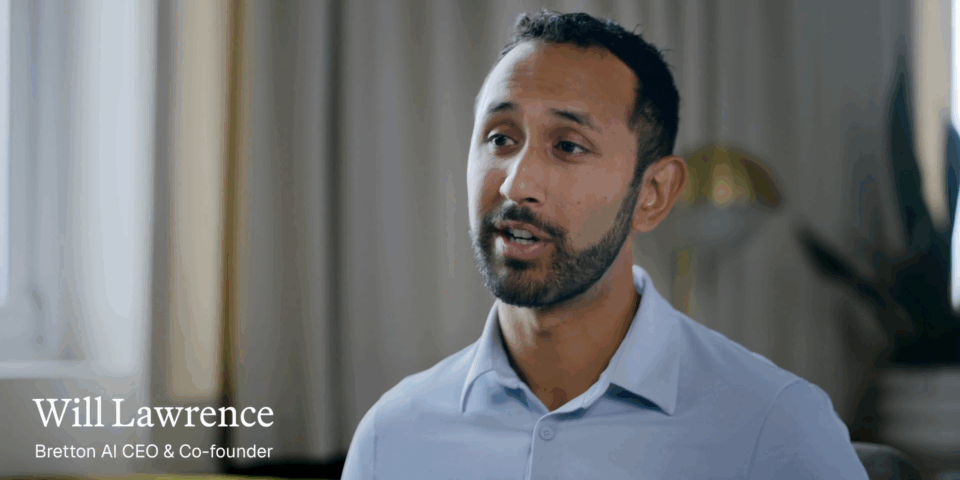
Chief executive and co-founder Will Lawrence said: “Financial crime work is high-volume, unstructured, and spans dozens of tools. This is why scaling compliance has historically meant hiring more people or outsourcing. It’s also why financial crime is the breakout use case for AI agents.”
The new funding will support product development, regulatory engagement and expansion into additional financial crime domains, the company said.
Founded in 2023 and headquartered in San Francisco, the company provides an agentic AI platform for financial institutions. Its technology supports transaction analysis, KYC and KYB reviews, AML and sanctions investigations, and ongoing transaction monitoring.
New investor TIAA Ventures joined the round, alongside existing backers Canvas Ventures, Greylock, Thomson Reuters Ventures and Y Combinator. Sapphire Ventures partner Rajeev Dham will join Bretton AI’s board.
Bretton AI use case
Mr Lawrence said the latest raise shows how the company is growing. “This funding, raised less than a year after our Series A, is a testament to the incredible work of our team and the undeniable results our customers are achieving,” he said.
“It’s a validation of our mission to change how financial institutions staff regulated work and the scale of the opportunity ahead of us.”
The company said clients have reported measurable cost and efficiency gains. It pointed to a Fortune 500 company that reduced institutional onboarding times by 50%, and an FDIC-regulated bank that reduced loan origination times by 90%.
Regarding the rebrand, Mr Lawrence said the new name reflects broader ambitions. “Our new name, Bretton AI, is an homage to Bretton Woods, the landmark international agreement that created the framework for post-WWII economic growth and stability,” he said.
“It was a system that enabled decades of financial inclusion and global expansion. We believe we’re at a similar inflection point today. AI has the potential to transform how financial institutions operate. Enabling them to serve billions more people safely and compliantly.”