
By Jack Queen and Jan Wolfe
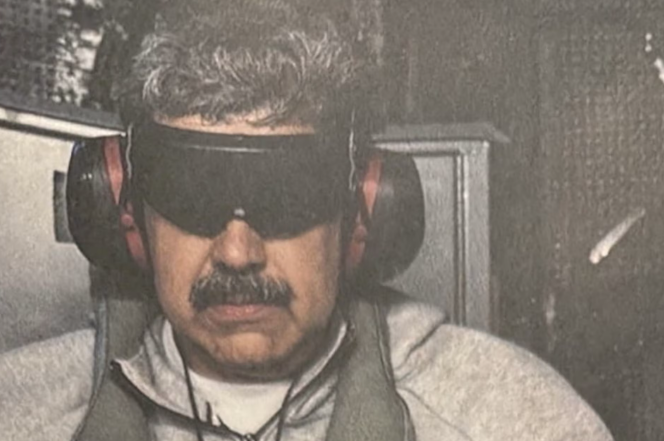
TOPPLED Venezuelan President Nicolas Maduro pleaded not guilty to narcotics charges after President Donald Trump’s stunning capture of him rattled world leaders and left officials in Caracas scrambling to regroup.
“I am innocent. I am not guilty. I am a decent man. I am still president of my country,” Maduro, 63, said through an interpreter in Manhattan federal court. His wife, Cilia Flores, also pleaded not guilty.
Maduro is accused of overseeing a cocaine-trafficking network that partnered with violent groups including Mexico’s Sinaloa and Zetas cartels, Colombian FARC rebels and Venezuela’s Tren de Aragua gang.
The indictment also accuses Maduro of “facilitating diplomatic cover for planes used by money launderers to repatriate drug proceeds from Mexico to Venezuela”.
He faces four criminal counts: narco-terrorism, cocaine importation conspiracy and possession of machine guns and destructive devices.
Maduro has long denied the allegations, saying they were a mask for imperialist designs on Venezuela’s rich oil reserves.
Prosecutors say Maduro has been involved in drug trafficking from the time he began serving in Venezuela’s National Assembly in 2000 to his tenure as foreign minister and subsequent 2013 election as the late president Hugo Chavez’s successor.
‘Abduction’ claims
Maduro lawyer said he anticipated voluminous and complex litigation over what he called his client’s “military abduction.” He said Maduro was not requesting his release but may later.
Federal prosecutors in New York first indicted Maduro in 2020 as part of a long-running narcotics trafficking case against current and former Venezuelan officials and Colombian guerrillas. An updated indictment made public on Saturday added some new details and co-defendants, including Cilia Flores.
The U.S. has considered Maduro an illegitimate dictator since he declared victory in a 2018 election marred by allegations of massive irregularities.
Experts in international law have questioned the legality of the raid, with some condemning Trump’s actions as a repudiation of a rules-based international order.
In Caracas, senior officials from Maduro’s 13-year-old government remain in charge of the South American oil producer of 30 million people, alternating between spitting defiance and possible cooperation with the Trump administration.
American oil companies will return to Venezuela and rebuild the sector’s infrastructure, Trump told reporters on Air Force One on Sunday.
“We’re taking back what they stole,” Trump said. “We’re in charge.”
Venezuela has the world’s largest reserves – about 303 billion barrels – but the sector has long been in decline from mismanagement, under-investment and U.S. sanctions, averaging 1.1 million bpd output last year, a third of its 1970s heyday.