


By PAUL O’DONOGHUE, Senior Correspondent
LARGE language models (LLMs)have helped financial institutions improve SARs (Suspicious Activity Reports), according to a fincrime expert.
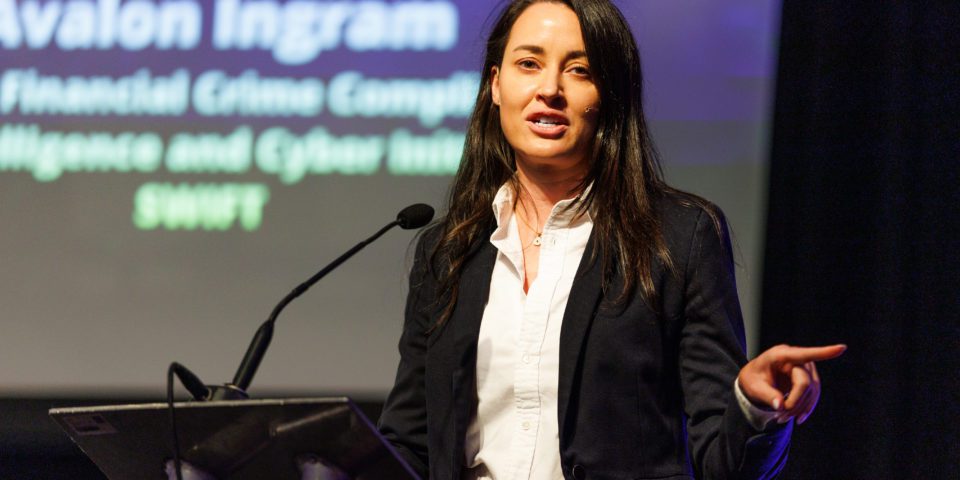
Avalon Ingram, APAC head of payments at SWIFT, said watchdogs have been impressed by SARs written with the aid of LLMs.
“I think large language models have been fantastic for compliance professionals. Taking away some of that repetitive, redundant work, in SAR writing,” she said.
“Where I have seen this implemented by banks, regulators are coming back and applauding the quality of those reports.
“They’re saying that the amount of information that they’re getting is a lot more accurate. They’re getting a lot better context around the narrative quality, etcetera.”
Ingram spoke at a webinar hosted by RegTech firm IMTF and AML Intelligence. The event, ‘From Hype to Impact: Real-World AI in Compliance and Risk Operations’, also featured Gion-Andri Büsser, co-CEO of IMTF.
The two experts said a hybrid approach to using AI for compliance tends to work best for financial institutions.
“We believe that you do not need to throw out everything you’ve done and set up,” Büsser said.
“Also from a regulator point of view, there are very tangible requirements that you as a bank have to fulfill. These things should not be thrown away.”
AI problem-solving
He said that many companies prefer to introduce AI technology to solve a specific problem. Or to improve efficiency in a certain area, such as transaction monitoring.
“If you can bring in an AI model around a very specific use case. [For example], to enhance the detection, to enhance the qualification. Then that’s truly beneficial. I think that’s where the industry needs to go.”
Ingram also said that AI works best to make human workers more efficient. Such as allowing staff to quickly sort through large data sets.
“I remember when I was selling sanctions data. The customers would say ‘Well if we have a file of 100,000 names, how long would it take you to screen that?’ she
“And we would have to go back, and do the math, and say we want to [allocate] this many hours,” she said.
“Now we’re talking about computing huge volumes of data within milliseconds and getting a response off the back of them. So I think AI has really offered us a lot of support in that space.”